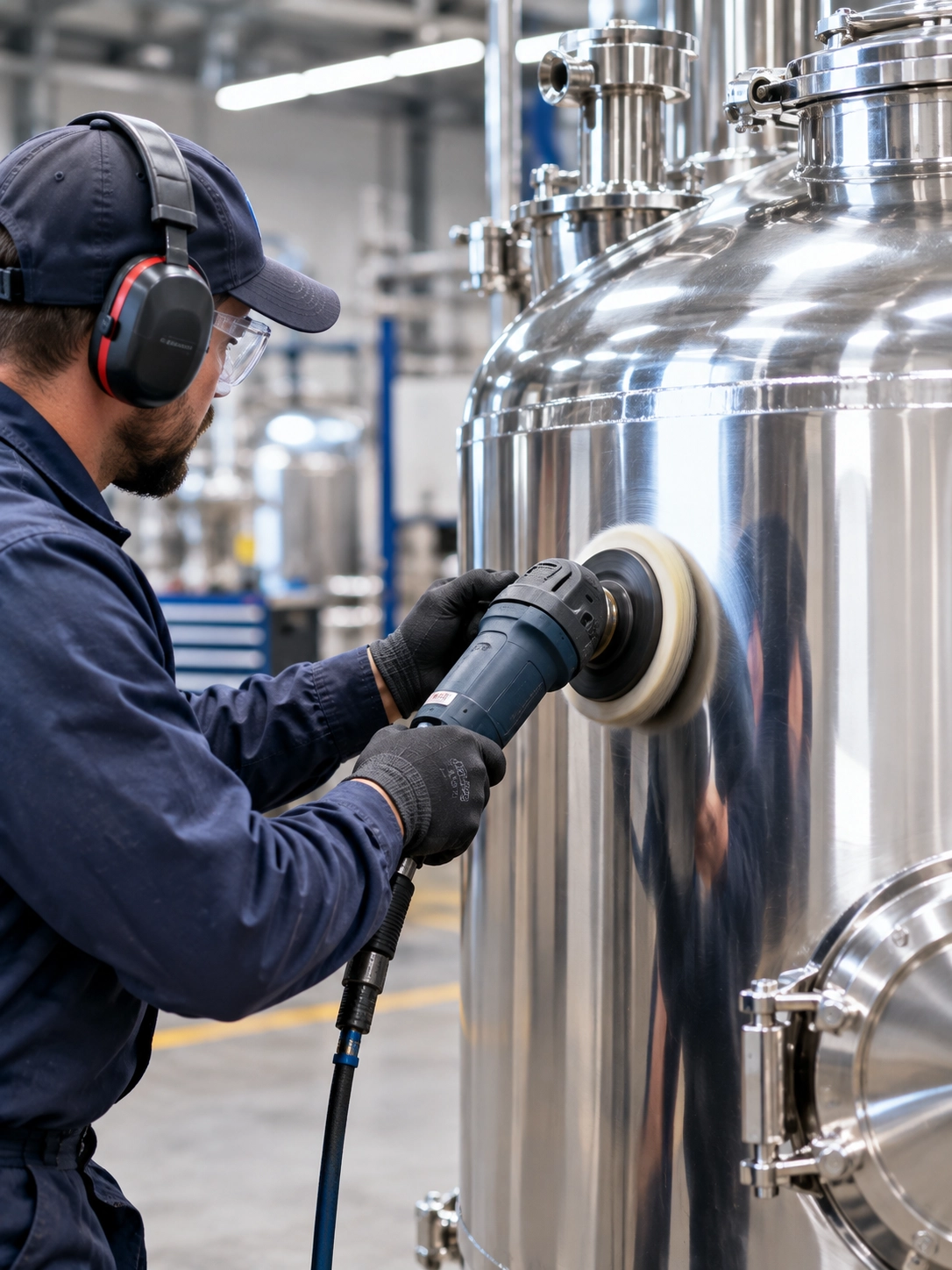
Surface finishing plays an important role in the final condition of stainless steel fabricated components, piping and process equipment.
Fortis Industrial Solutions provides surface treatment capabilities including mechanical polishing, sanitary finishing, weld cleaning, pickling and passivation, depending on the project requirements.
Mechanical polishing for stainless steel components where the specified surface condition requires a refined mechanical finish.
Sanitary finishing for stainless steel piping and fabrication applications where surface condition is an important project requirement.
Weld cleaning as part of stainless steel fabrication and piping finishing requirements.
Pickling treatment for stainless steel surfaces as specified for the applicable fabrication or piping scope.
Stainless steel passivation as part of the specified surface treatment and finishing requirements.
Surface treatment activities can be selected according to the material, application and project specification.
Review the component, piping or fabrication requirement and specified surface condition.
Prepare the stainless steel surface according to the applicable fabrication and finishing scope.
Apply the specified mechanical polishing, weld cleaning, sanitary finishing or surface treatment.
Complete the finishing scope according to the project specification and application requirements.
| Fortis Finish | Typical Finish | Target Ra | Grit | Typical Application |
|---|---|---|---|---|
| F0 – Mill / Structural | Mill finish | N/A | N/A | Frames, supports, bases, non-product-contact components |
| F1 – Industrial Clean | #2B | ≤ 0.80 µm / 32 µin Ra | N/A | Utility piping, equipment exteriors, industrial process components |
| F2 – Brushed | #4 | ≤ 1.0 µm / 40 µin Ra | ~150 grit | Exterior equipment surfaces, guards, panels, architectural/industrial stainless |
| F3 – Sanitary | #4A / Dairy finish | ≤ 0.80 µm / 32 µin Ra | ~180 grit or finer | Food, beverage, dairy and sanitary product-contact equipment |
| F4 – High-Purity MP | Fine mechanical | ≤ 0.51 µm / 20 µin Ra | ~220–320 grit or finer | High-purity product-contact piping, pharmaceutical and bioprocess service |
| F5 – High-Purity EP | Electropolished | ≤ 0.38 µm / 15 µin Ra | ~240–320+ grit | Critical pharmaceutical, biotech and high-purity process surfaces |
| F6 – Custom and/or Ultra-Finish |
Customer-specified | Project specific | Project specific | Special hygienic, semiconductor, ultra-high-purity or OEM requirements |
These are separate surface-treatment processes.
Mechanical polishing reduces surface roughness and improves the appearance and cleanability of stainless steel.
Pickling chemically removes weld scale, heat tint, embedded contamination and the chromium-depleted surface layer created by welding or heat exposure.
Passivation chemically removes free iron and helps restore the naturally occurring chromium-rich passive oxide layer that provides stainless steel with its corrosion resistance.
Depending on the condition of the material and project specification, more than one treatment may be required.
Welding can produce oxide discoloration or heat tint around the weld zone. Depending on the required finish and service environment, Fortis can use mechanical weld cleaning, polishing, pickling or other specified surface-treatment methods to remove discoloration and prepare the stainless steel surface for final finishing and passivation.
For sanitary and corrosion-sensitive applications, weld treatment is particularly important because heavy oxide scale and heat tint can reduce the corrosion resistance of the affected surface.
Yes. Surface-finishing requirements can be developed around a specified Ra — Roughness Average — value where required by the customer or project specification.
Sanitary process equipment and tubing may require smoother product-contact surfaces to improve cleanability and reduce locations where product residue or contaminants can accumulate. The required finish should be identified before fabrication so material condition, welding, grinding and final polishing can be coordinated accordingly.
Contamination control is important when fabricating and finishing stainless steel. Fortis uses stainless-dedicated or appropriately controlled abrasives, brushes and finishing tools where required to minimize transfer of free iron and other contaminants onto stainless steel surfaces.
Following fabrication and finishing, additional cleaning, pickling or passivation can be performed where specified to help remove surface contamination and restore corrosion-resistant surface conditions.
Share your stainless steel fabrication, piping or surface treatment requirement with Fortis Industrial Solutions.
